What is Node.js? A Definition
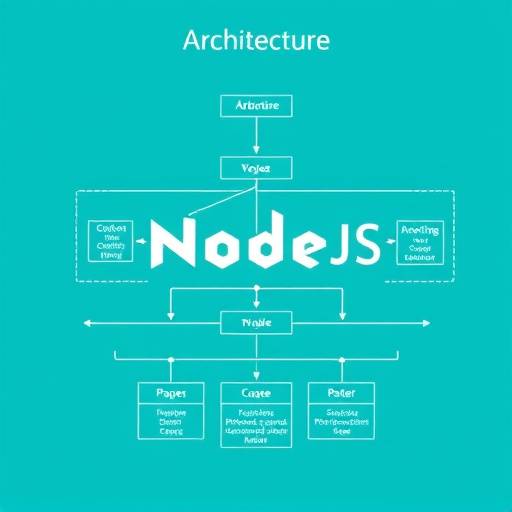
Node.js is an open-source, cross-platform JavaScript runtime environment that executes JavaScript code outside a web browser. It allows developers to use JavaScript to write server-side applications, command-line tools, and desktop applications. Node.js represents a paradigm shift, enabling JavaScript, a language traditionally confined to client-side development, to power the back-end. This unified language approach streamlines development, allowing teams to use the same language for both the front-end and back-end, reducing context switching and increasing efficiency.
At its core, Node.js utilizes the V8 JavaScript engine (the same engine used by Chrome), providing incredibly fast and efficient execution of JavaScript code. This, combined with its event-driven, non-blocking I/O model, makes Node.js exceptionally well-suited for building scalable and real-time applications. Unlike traditional server-side technologies that rely on multi-threaded architectures, Node.js employs a single-threaded event loop, allowing it to handle a large number of concurrent connections without the overhead of managing multiple threads.
The Node.js ecosystem is vast and thriving, with a massive collection of open-source libraries and modules available through npm (Node Package Manager). This allows developers to quickly and easily add functionality to their applications, from handling HTTP requests and database connections to implementing complex business logic. The active community surrounding Node.js ensures that the ecosystem continues to evolve and improve, with new libraries and tools being constantly developed and shared.
A Brief History of Node.js
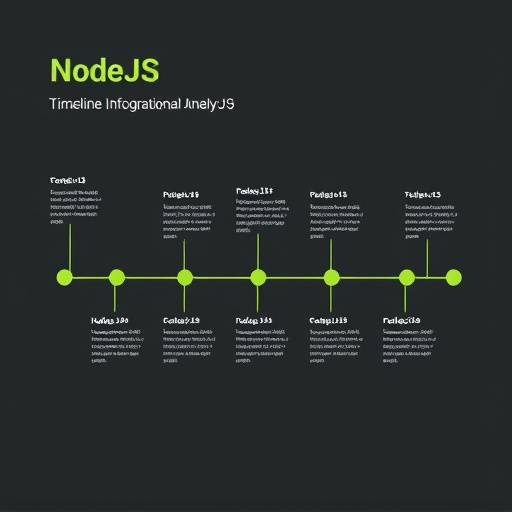
Node.js was created by Ryan Dahl in 2009. He was inspired to create Node.js after observing the limitations of traditional web servers while working on file uploads. He envisioned a system that could handle many concurrent connections efficiently, paving the way for real-time applications.
Dahl chose JavaScript because of its familiarity and ubiquity among web developers. He embedded the V8 JavaScript engine within a C++ program, allowing JavaScript code to be executed on the server. The initial release of Node.js focused on providing a low-level API for handling HTTP requests and file I/O.
Over the years, Node.js has undergone significant evolution. In 2011, npm, the Node Package Manager, was introduced, revolutionizing the way developers share and reuse code. The creation of npm accelerated the growth of the Node.js ecosystem, leading to a proliferation of open-source libraries and frameworks.
In 2015, the Node.js Foundation was formed to provide governance and oversight for the Node.js project. This helped to ensure that Node.js remained an open and collaborative project, attracting contributions from developers and organizations around the world. The Foundation has played a crucial role in promoting the adoption of Node.js and fostering innovation within the Node.js community.
Node.js vs. Other Technologies
Node.js distinguishes itself from other server-side technologies in several key aspects. Unlike traditional platforms that use multi-threaded architectures to handle concurrent requests, Node.js employs an event-driven, non-blocking I/O model. This allows it to handle a large number of concurrent connections with minimal overhead.
One of the most significant differences is the use of JavaScript on both the front-end and back-end. This eliminates the need for developers to learn and switch between different languages, simplifying the development process and improving code maintainability. In contrast, platforms like Java and .NET require developers to use separate languages for the front-end and back-end.
Compared to languages like Python and Ruby, Node.js often exhibits better performance in I/O-bound applications. The non-blocking I/O model allows Node.js to handle requests concurrently without blocking the execution thread, leading to faster response times and improved scalability. However, for CPU-intensive tasks, languages like Python and Java may be more suitable due to their ability to leverage multi-threading.
| Feature | Node.js | Java | Python | Ruby on Rails |
|---|---|---|---|---|
| Language | JavaScript | Java | Python | Ruby |
| Architecture | Event-driven, Non-blocking I/O | Multi-threaded | Multi-threaded (with GIL) | Multi-threaded |
| Performance (I/O-bound) | Excellent | Good | Fair | Fair |
| Performance (CPU-bound) | Fair | Excellent | Good | Fair |
| Ecosystem | Vast (npm) | Mature (Maven) | Extensive (pip) | Mature (Gems) |
| Use Cases | Real-time applications, APIs, Microservices | Enterprise applications, Web applications | Data science, Web development, Scripting | Web applications |
Advantages of Using Node.js
Node.js offers a wide range of advantages that make it an attractive choice for modern web development. Its event-driven, non-blocking I/O model allows it to handle a large number of concurrent connections efficiently, resulting in improved scalability and performance.
The use of JavaScript on both the front-end and back-end simplifies the development process, reduces context switching, and improves code maintainability. This "JavaScript everywhere" approach streamlines development workflows and allows teams to be more productive.
The vast and thriving Node.js ecosystem, powered by npm, provides access to a wealth of open-source libraries and modules. This allows developers to quickly and easily add functionality to their applications, reducing development time and effort.
Node.js is also well-suited for building real-time applications, such as chat applications, online games, and streaming services. Its non-blocking I/O model and event-driven architecture make it ideal for handling the high levels of concurrency required by these types of applications.
Furthermore, Node.js is cross-platform, meaning that it can run on a variety of operating systems, including Windows, macOS, and Linux. This allows developers to build applications that can be deployed on a wide range of environments without modification.
Finally, Node.js can be integrated with many modern frameworks and databases. It allows using a lot of different technologies. For example it can be integrated with popular front-end frameworks like React, Angular, and Vue.js, as well as with databases like MongoDB, PostgreSQL, and MySQL.